How Much to Charge for Pressure Washing to Make a Profit
See the rates a San Antonio pressure washing company charges for driveways, house washes, roofs and more. Then learn how to set your own prices so every job earns a profit.
If you run a pressure washing business, you've probably bid low to win a job at some point. It fills the schedule and keeps the rig moving, but at the end of the month you look at your bank account and your expenses have taken a huge bite out of your profit. Being busy doesn't mean you're profitable, it just means your calendar is full.
The good news is that this is relatively easy to fix once you know what each job actually costs you. This guide shares the rates a real pressure washing company charges (driveways, house washes, roofs and more), then walks you through five steps to make sure your own prices earn a profit. The video above covers the same ideas in a few minutes, and the rest of this post goes deeper on each one with the math done for you.
Pressure Washing Rates From a Real Company
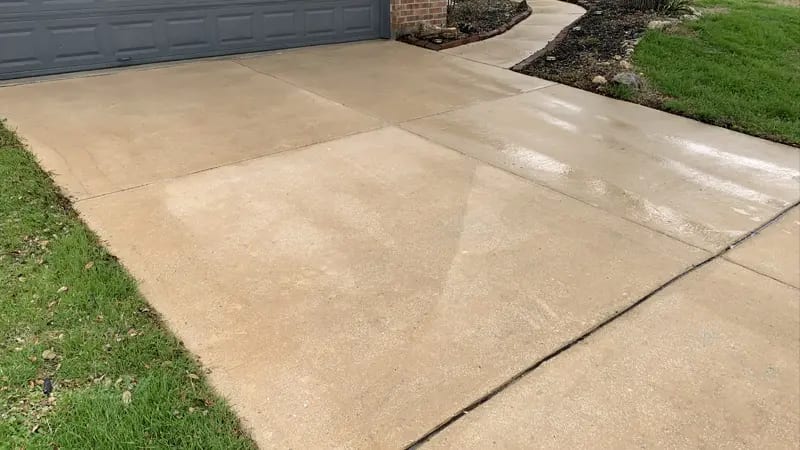
These are the rates Guardian Pressure Washing charges in San Antonio, Texas, in 2026, and Guardian Pressure Washing prices every quote in Profit Max. Each service has a rate and a minimum, which is the least a job costs no matter how small it is.
| Service | Rate | Minimum |
|---|---|---|
| Driveway cleaning | $0.20 per sq ft ($0.15 over 7,000 sq ft) | $249 |
| Back patio cleaning | $0.20 per sq ft | $99 |
| Pool deck cleaning | $0.25 per sq ft | $299 |
| House wash, vinyl siding | $0.13 per sq ft | $349 |
| House wash, brick, stone or stucco | $0.18 per sq ft | $349 |
| Two-story house wash | $100 added to the house wash | None |
| Roof cleaning, shingle | $0.25 per sq ft | $499 |
| Roof cleaning, tile | $0.35 per sq ft | $699 |
Keep in mind that rates vary quite a bit by region. Labor, fuel and insurance cost more in some parts of the country, and a short season in a northern state tends to push prices up. A town with a pressure washer on every corner tends to pull them down.
Use these rates as a starting point rather than a price list to copy line for line; the rest of this guide shows you how to check them against your own costs.
1. Figure Out What Each Job Costs You
Quoting without knowing your costs is like driving with your fuel gauge covered; you won't know you're in trouble until the truck stops.
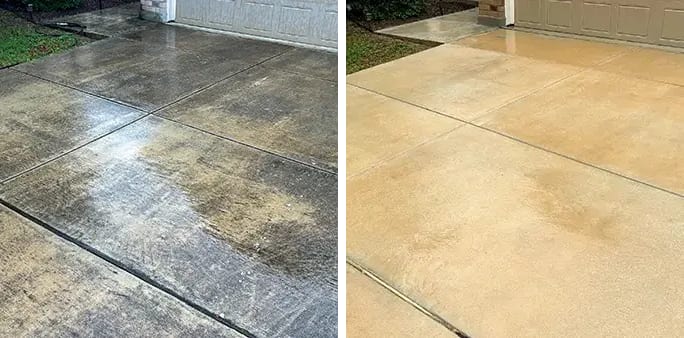
Labor and chemicals are the costs everyone thinks of, but drive time, fuel, insurance and equipment come out of the same price. So does the advertising it took to get the customer to call you in the first place.
Let's say you clean a 1,500 square foot driveway at $0.20 a square foot, which comes to $300. Your technician spends about an hour on site ($22), the sodium hypochlorite comes to about $23, and the drive there and back takes another hour ($22) plus about $10 in fuel.
If your share of insurance, equipment and other overhead comes to $50 a job, and the customer cost you $60 in advertising, that's about $187 in expenses and about $113 in profit (a 38% margin). That job makes a profit, but you'd never know how much without doing the math.
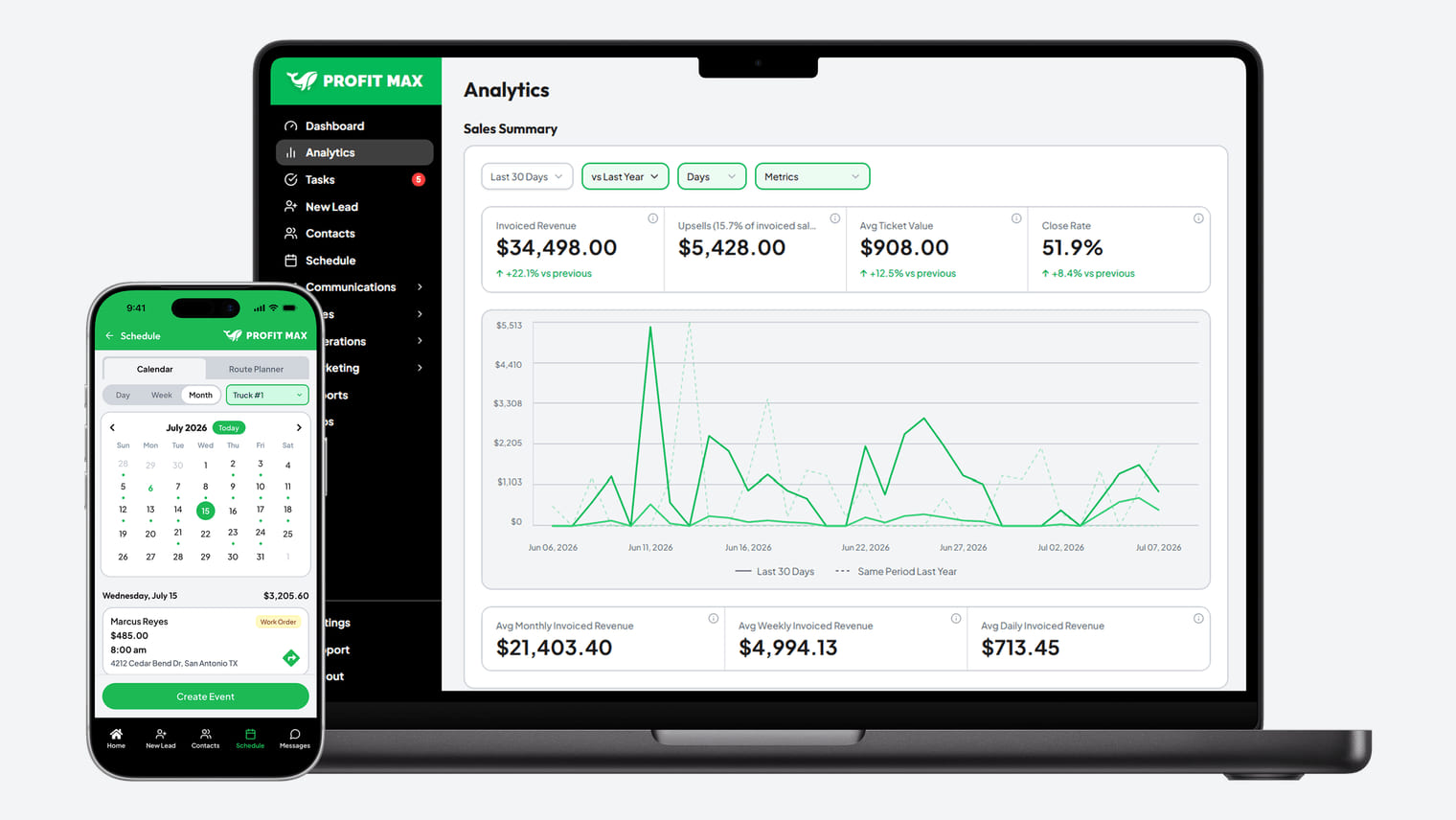
Pick a target profit margin for each service (anywhere from 20% to 50%, depending on the service), and make sure every quote clears it. Most pressure washing businesses aim for a 50% margin with employees, and upwards of 70% as solo operators. A spreadsheet can handle this if you only send a handful of quotes a week. Profit Max calculates what each quote costs you from your labor rates, drive time, fuel, materials and overhead, which allows you to see the profit before you send it. It also warns you when a quote falls below the profit minimums you set.
2. Set a Minimum That Covers the Trip
Minimum-priced jobs are generally your least profitable jobs, because the drive, the overhead and the cost of winning the customer are the same whether the job is big or small.
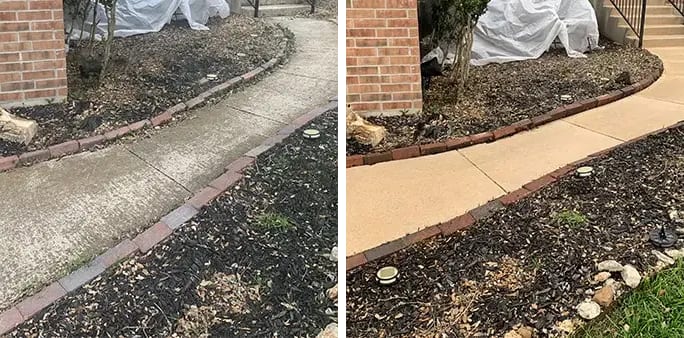
In the example above, those fixed costs add up to $142 before your technician even pulls the surface cleaner off the trailer. If you clean a 400 square foot patio at $0.20 a square foot, that's only $80, so you've lost money before you count a minute of labor.
A minimum charge is the least you'll take for a trip, and it needs to cover those fixed costs plus your margin. That's why Guardian Pressure Washing's driveway minimum is $249, even though a 600 square foot driveway at $0.20 a square foot would only come to $120. At $249, that small driveway still leaves about $76 in profit once the labor and chemicals are counted.
Nobody likes losing a job over a minimum, but a job that loses money isn't worth winning. If a customer only wants that small patio cleaned, you're better off charging your minimum (or passing on the job) than driving across town to lose about $100. Some jobs are worth walking away from.
3. Add Services to the Same Trip
The best way to escape that expense floor and increase profit is to bundle services. A second service on the same trip doesn't cost you another drive, another customer or another share of overhead, so most of what you charge for it is profit.
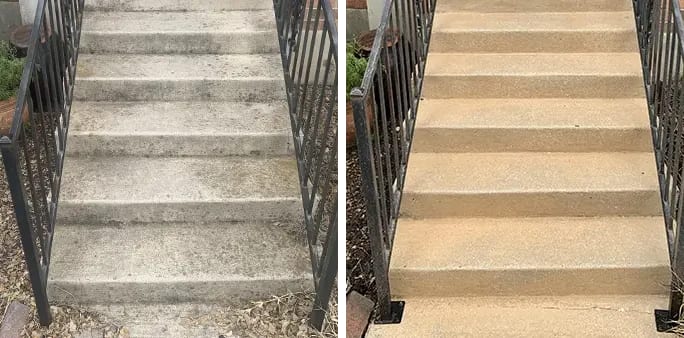
The more services you add to a trip, the less each one costs you to deliver.
Guardian Pressure Washing's back patio cleaning has a $99 minimum, which would lose money as a trip of its own. Added to a driveway job, though, it only costs the extra time and chemicals. If the patio takes your technician 30 minutes ($11) and $16 in chemicals, that $99 add-on earns about $72 in profit. On the $300 driveway job from earlier, that's about $185 in profit instead of $113.
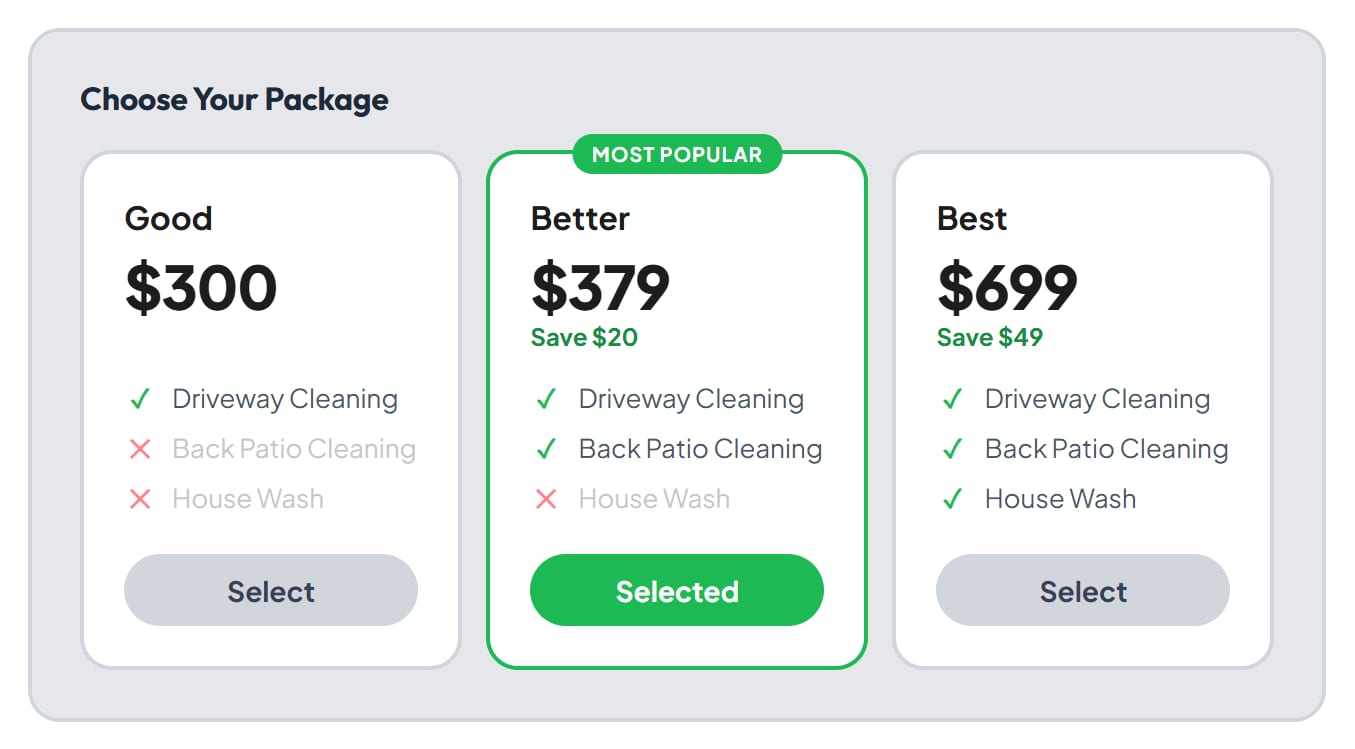
Profit Max's Packages and Limited-Time Offers allow you to grow the size of each job without a hard sell. A package lets the customer pick from up to three versions of the job, like the driveway alone, the driveway and patio, or the whole property.
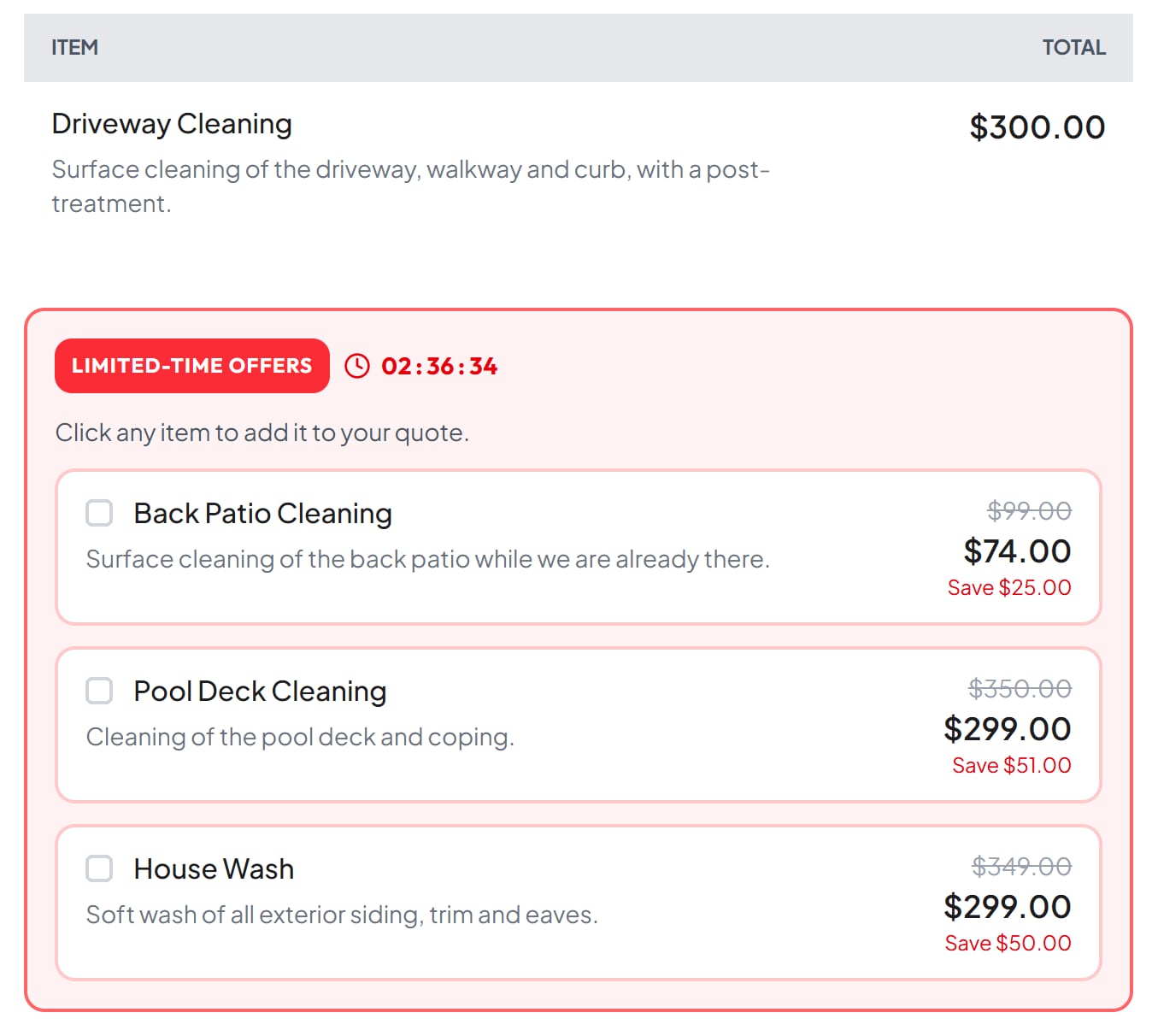
Limited-Time Offers add discounted services to the quote, and with the countdown timer on, the discount holds for three hours after the customer first opens it.
4. Test Your Prices Instead of Guessing
Raising your prices increases the profit you make on each job, but it can also lower your close rate. If you win 7 out of 10 quotes with $100 in profit on each job, that's $700 in profit. If you raise your prices and win 4 out of 10 quotes with $200 in profit on each, that's $800 in profit for less work.
You might be thinking that losing three more jobs out of every ten sounds like a bad trade, and it would be if every job earned the same profit. It doesn't, which is the whole point.
That only holds for prices that already earn a profit, though. A high close rate on jobs that lose money only means you lose money more often.
Most owners guess at this, and a guess tends to land on whatever the competition charges. Profit Max finds your most profitable prices automatically. It tests slightly higher and lower prices on your quotes, tracks which ones your customers approve, and moves each price toward the one that earns you the most profit.
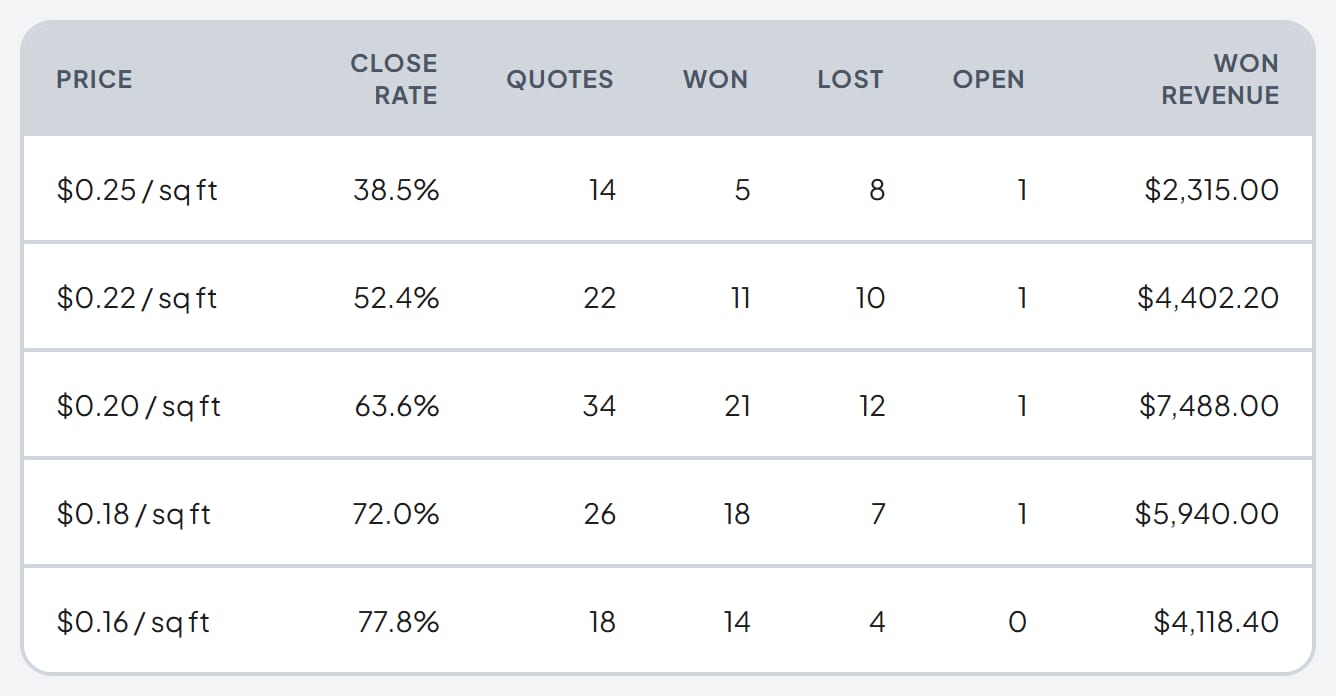
Keep in mind that it takes a few dozen quotes before the results mean much. The Close Rate by Price report shows how often you win at each rate, so you can see the tradeoff with your own numbers rather than someone else's.
5. Turn One-Time Customers Into Service Plans
When a customer books a one-time job and doesn't call you again, you have to spend money on advertising to win the next one, and that cycle never ends. You're always chasing leads, and when things slow down in the off season, you suddenly have no work.
A service plan fixes this by bundling several services throughout the year at a discount, paid in manageable monthly payments that become routine for the customer (think of it as a gym membership for their property).
Let's say a customer's driveway is cleaned twice a year at $300 and their house is washed once a year for $400, which comes to $1,000 a year. At 10% off, the plan is $900 a year, or $75 a month.
If 20 customers are on a plan like that, that's $1,500 a month in recurring revenue before you book a single new job, and every appointment after the first one costs you nothing in advertising. That changes how the slow months feel.
Profit Max allows you to turn any line item on a quote into a service plan and choose how often the service is provided. The whole plan can then be billed as a monthly payment with a discount applied.
The right price for a pressure washing job is the one that earns you the most profit, even if you win fewer jobs at it. Start with the rates above, do the math on your own jobs, and adjust for your region.
Profit Max is the service business CRM that maximizes profit and builds recurring revenue, and you can try it free for 14 days.